

A personal loan is one of the few borrowing tools that can either save you money or cost you more, depending entirely on what you use it for. It is unsecured, which means no collateral, no appraisal, and no risk to your home or your car. It carries a fixed rate, a fixed payment, and a payoff date you know before you sign. Those features make it the right answer for some expenses and the wrong answer for others, and the difference is worth understanding before you apply anywhere.
Florida borrowers face a particular version of this decision. Hurricane deductibles are calculated as a percentage of your home's insured value, so a single storm can put thousands of dollars between you and an insurance payout. Credit card balances nationwide sit above a trillion dollars, and the rates attached to them make a balance one of the most expensive ways to owe money. Both situations point toward the same question: is fixed-rate borrowing the smarter move here, or is something else?
The answer changes with the expense, the rate you are already paying, and the room in your monthly budget. A loan that retires a high-rate card balance at half the cost is doing real work for you. A loan that funds something you could have postponed, or one whose payment only fits in a good month, adds pressure rather than removing it. Telling one from the other is a matter of knowing how these loans are priced, what it takes to qualify, and how they stack up against the alternatives.
When Does a Personal Loan Make Sense for Florida Borrowers?

A personal loan is an unsecured, fixed-rate installment loan. You borrow a set amount, repay it in equal monthly payments, and the balance reaches zero on a date you know before you sign. No collateral is attached, which means your home and your car stay out of the equation. That structure is what separates a personal loan from a credit card, and it also tells you when a loan is the right tool.
The deciding factor is usually the shape of the expense, not its size. In the Federal Reserve's most recent Survey of Household Economics and Decisionmaking, 59% of adults had at least one major unexpected expense in the prior 12 months, with vehicle repairs, home and appliance repairs, and medical bills topping the list. Those costs share a profile. They hit once, they have a knowable price tag, and they need to be paid now rather than saved for. That profile lines up cleanly with fixed-term borrowing.
The use cases we see most from our members follow the same logic. Consolidating high-rate credit card balances into one fixed payment, covering a home repair or an improvement project, handling a medical bill that a payment plan cannot stretch far enough, paying for a move, or funding a major purchase without putting it on a revolving line. Each one is a defined dollar amount with a defined finish.
The cases where a personal loan is the wrong answer follow just as clear a pattern. Borrowing to cover a recurring monthly shortfall does not eliminate it; it adds a payment on top of it. Financing discretionary spending you could postpone tends to cost more than the purchase is worth. And if the expense is small enough that your savings can absorb it without draining your emergency cushion, paying cash is almost always cheaper than paying interest.
Before you apply anywhere, run the same test our lending team runs. Is the expense one-time and necessary? Does the new monthly payment still fit your budget after it is added? Is the rate lower than what you would pay on the alternative? Can you name the month the loan will be paid off? Four yeses are a good sign. A no on any of them is worth a conversation before you borrow.
When does a personal loan make sense?
A personal loan makes sense when you face a one-time, necessary expense with a known cost, the monthly payment fits your budget, and the rate beats your other borrowing options. That situation is common: only 63% of adults said they could cover a hypothetical $400 emergency expense using cash or its equivalent, according to the Federal Reserve's 2025 survey, and the most common major unexpected expenses carry a median cost between $1,000 and $1,999. A fixed-rate installment loan turns a cost like that into a predictable payment with a defined payoff date, which is why it works better for a single large expense than for ongoing budget gaps.
Personal Loans and Credit Cards: What's Smarter for Florida Households
Same expense, two very different ways to pay for it. A credit card is revolving credit with a variable rate, a minimum payment, and no finish line. A personal loan is installment credit with a fixed rate, a set payment, and a payoff date. That structural difference matters more than most borrowers realize once the balance climbs into the thousands.
Start with the cost. As of May 2026, the Federal Reserve reported an average 22.15% interest rate on credit card accounts assessed interest, meaning the accounts that actually carry a balance from month to month. Compare that with the NCUA's national averages, where a 36-month unsecured fixed-rate loan averaged 10.64% at credit unions and 12.00% at banks in the fourth quarter of 2025. On a $10,000 balance, that spread is not a rounding error. It is the difference between paying off a repair and paying interest on it for years.
The payment structure widens the gap further. Credit card minimum payments are calculated to keep the account current, not to retire the balance, so a large balance at a revolving rate can stretch out far longer than anyone plans. An installment loan works the other way. Every payment includes principal, the balance drops on a schedule, and the loan closes itself out on a date you can circle on the calendar. Our personal loans are available for 15 to 60 months at fixed rates, so the payment you see at signing is the payment you make until the balance hits zero.
None of that makes a credit card the wrong tool in every situation. For purchases you will pay off in full on the next statement, a card is convenient and incurs no interest. A true 0% introductory offer can also work if you are confident the balance will be cleared before the promotional window closes and the standard rate takes over. The trouble starts when the balance outlives the promo, which is when a lot of our members come to us about consolidating.
Payday and deferred presentment products sit in a different category altogether. They are built around a very short repayment window, and when a borrower cannot clear the balance on schedule, the fees recur rather than amortize. Members who need a small amount before their next paycheck can use our Early Check Advance loans for up to $550 at credit union rates, repaid when the paycheck lands. For anything larger, a fixed-rate installment loan gives you a payment and a payoff date rather than a cycle that restarts.
Personal loan vs. credit card: which is better?
A personal loan is usually the better choice for a large, one-time expense you cannot repay within a month or two, because it costs less and it ends. Credit card accounts carrying a balance were charged an average of 22.15% as of May 2026, according to Federal Reserve data, while the national average for a 36-month unsecured loan at a credit union was 10.64%. A credit card still wins for everyday purchases, with charges cleared on the next statement, when no interest accrues at all. The dividing line is time: pay it off this month and use the card, carry it for a year or more, and the fixed-rate installment loan is the cheaper structure.
Using a Personal Loan for Home and Hurricane Repairs in Florida
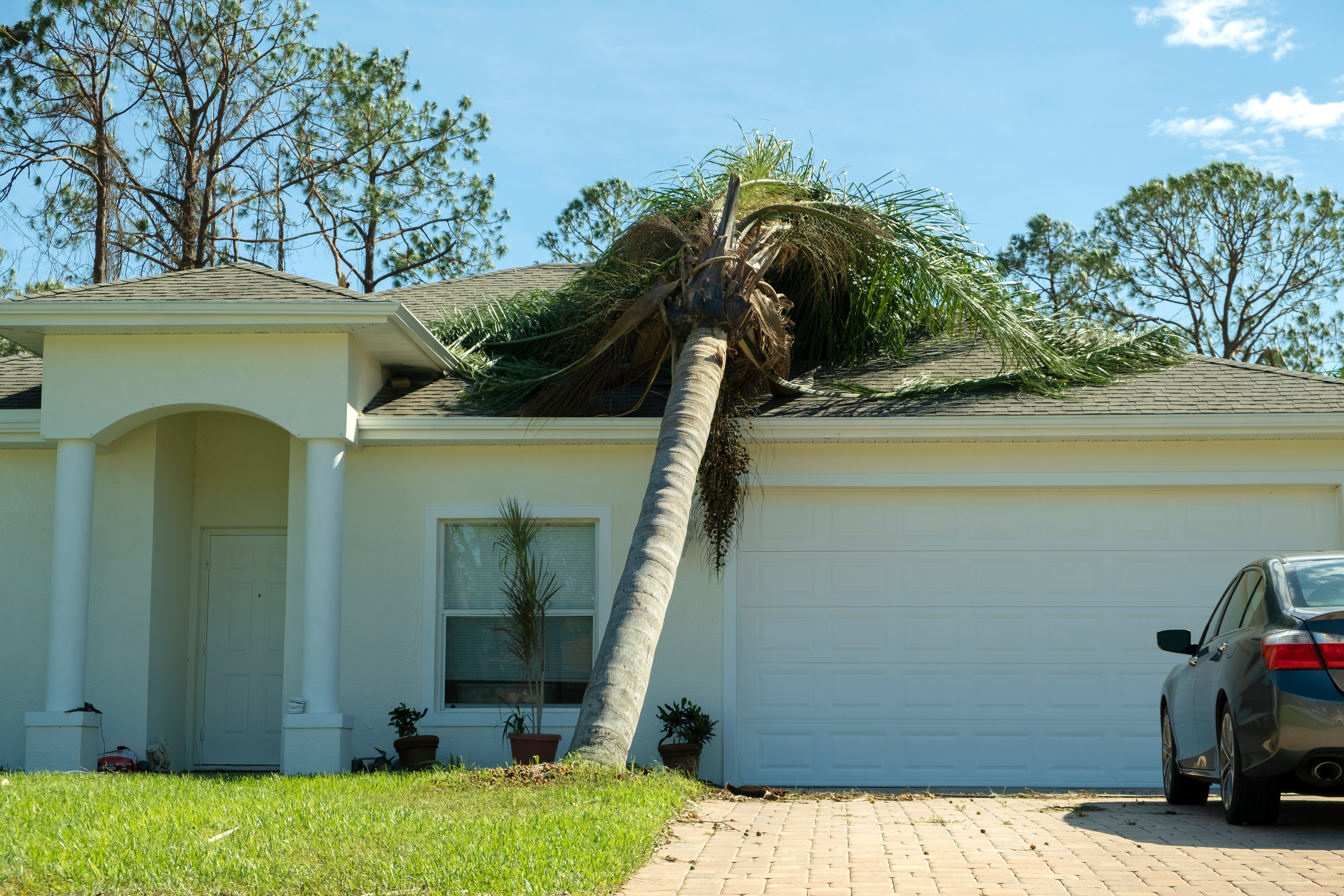
Florida homeowners' policies work differently from policies in most of the country, and the difference shows up as a separate hurricane deductible. Under state law, insurers must offer hurricane deductible options of $500, 2%, 5%, or 10% of the policy's dwelling limits. Because most of those options are a percentage of Coverage A rather than a flat dollar amount, your out-of-pocket number rises with the insured value of the home. A 2% deductible on a home insured for $400,000 is $8,000 before the insurance company pays anything.
That math creates three specific gaps where borrowing comes into play. Damage that falls below the deductible never triggers a claim payment, so the repair is yours to cover. The deductible must be paid before coverage kicks in for a larger claim. And repairs often cannot wait for the claim to be processed, since a compromised roof or a soaked interior gets worse by the week. Flood damage falls outside hurricane coverage entirely and requires a separate flood policy, which catches many homeowners off guard after a storm surge.
An unsecured loan fits those gaps well because it funds quickly and leaves your home equity intact. A home equity product requires equity, an appraisal, and a longer timeline, which is difficult when a tarp is the only thing between your living room and the next rain band. Florida Credit Union's personal loans range from $3,001 to $50,000 with terms of 15 to 60 months; no collateral is required, and decisions are made within minutes in most cases. You are borrowing against your signature rather than against the house you are trying to repair.
There are limits to what this tool should cover. A full rebuild after catastrophic structural damage is an insurance matter first, and financing that scale of work without securing financing is rarely the right move. If the claim is going to cover the repair, borrowing for the full amount instead of the gap just adds interest to a bill someone else is paying. It is also worth following the state's guidance and filing a claim even when the repair cost falls below your deductible, since that filing creates a record and allows you to add a supplemental claim if the contractor discovers hidden damage once the work starts.
The practical move is knowing your deductible number before a storm is named, not after. Pull your declarations page, find the dollar figure printed next to the hurricane deductible, and decide now how you would cover it. Members who have that number in hand make faster, cheaper decisions in the days after a storm, when contractors are booked, and everyone is competing for the same crews.
Can you use a personal loan for hurricane repairs in Florida?
Yes, and it is one of the most common uses we see. Florida insurers must offer hurricane deductible options of $500, 2%, 5%, or 10% of dwelling coverage, according to the Florida Department of Financial Services, which means a homeowner with a percentage-based deductible can owe thousands out of pocket before insurance pays a dollar. An unsecured personal loan covers that deductible, funds repairs that fall below it, or bridges the gap while a claim is being processed, all without putting the home up as collateral. Flood damage is not covered under hurricane coverage and requires a separate flood policy, so check your declarations page before assuming a claim will cover storm-related water damage.
How Florida Credit Union Members Qualify for a Personal Loan
Qualifying starts with membership, and membership is simpler than most people expect. Anyone who lives or works in one of the 48 north and central Florida counties we serve is eligible, along with the immediate family of current members, students in select counties, and Santa Fe College and Florida Gateway College students and alumni. There is no membership fee. Opening a savings account with $5 makes you a member and a part-owner of the credit union, and that share account is what gives you access to our loan products.
From there, the review looks at four things: your credit history, your income and employment, your debt-to-income ratio, and the loan amount you are requesting. Your debt-to-income ratio is your total monthly debt payments divided by your gross monthly income, and it tells a lender whether another payment realistically fits in your budget. A borrower with a strong score but very little room between income and existing obligations can still run into trouble, which is why no single number decides the outcome.
Credit history shapes both approval and pricing. Your rate and term depend on your credit rating, and the maximum amount you can borrow depends on your credit history, your debt-to-income ratio, and other factors we review during underwriting. A stronger profile earns a lower rate and access to the larger end of the range. A thinner or bruised file does not automatically mean no, which is a meaningful difference between a credit union review and an automated decline at a lender that never sees you.
That flexibility shows up in the products themselves. Our signature personal loans range from $3,001 to $50,000 for members whose credit qualifies for that amount. Members with imperfect credit who need a smaller sum can consider our No-Hassle loans, which range from $1,000 to $3,000 at competitive rates and affordable payments. Members working on rebuilding also have access to free credit counseling and credit score analysis, so a decline today does not have to be permanent.
The application itself takes a few minutes. You will need the amount you want to borrow, the term you want, your contact information and Social Security number, your current employment and income, including your employer's name and contact information, and the same details for a co-applicant if you are applying with one. Applications can be completed online with an electronic signature, by phone at 1-800-284-1144, or at any of our 14 branches across north and central Florida. Decisioning happens within minutes in most cases, and all loans are subject to credit approval.
Debt Consolidation Options for Florida Borrowers
Debt consolidation means using one fixed-rate loan to pay off several revolving balances, leaving you with a single payment, a single rate, and a single payoff date. The appeal is rarely just the interest savings. Members tell us the relief comes from tracking one due date instead of five, and from watching a balance that actually falls each month.
The scale of the problem explains why the question keeps coming up. The Federal Reserve Bank of New York reported that credit card balances stood at $1.25 trillion in the first quarter of 2026, with 4.8% of all outstanding household debt in some stage of delinquency. Balances at revolving rates compound quietly, and the minimum payment is designed to keep the account open rather than close it out.
Florida borrowers generally have three consolidation paths, and they trade off differently. An unsecured consolidation loan replaces the balances with a fixed installment payment and leaves your home out of it. A balance transfer card can work if the promotional rate covers the full payoff period, though transfer fees apply and the standard rate takes over the moment the window closes. Home equity products usually priced lower than unsecured borrowing, but they require equity, an appraisal, and a longer timeline, and they put your house behind the debt. Trading unsecured credit card debt for debt secured by your home is a bigger decision than the rate difference suggests.
Florida Credit Union's debt consolidation loans sit in that first category. Amounts range from $3,001 to $50,000, with fixed rates and terms of 15 to 60 months. Personal installment loans carry an application fee between $25 and $100, depending on loan type, and there is no penalty for paying the loan off early. Members can also pay in advance for up to 6 months, which shortens the timeline for anyone who receives a bonus or a tax refund partway through the term.
Consolidation does have a failure mode worth naming. If the cards get paid off and then rebuilt, you end up with the loan payment and the card balances, which is worse than where you started. The fix is behavioral rather than financial, and it usually means putting the cards away until the loan is retired. Members who want help getting there can use our free credit counseling and credit score analysis to build a plan before taking on new debt.
Can I use a personal loan to consolidate debt?
Yes, and it is one of the most common reasons Florida borrowers apply. A consolidation loan pays off your existing balances and replaces them with one fixed payment and a set payoff date, usually at a lower rate than the cards it retires. The math matters here: the New York Fed reported $1.25 trillion in outstanding credit card balances as of the first quarter of 2026, and card accounts carrying a balance were charged an average of 22.15% according to Federal Reserve data. Consolidation only works if the paid-off cards stay paid off, so the plan should include what happens to those accounts after the balances hit zero.
Personal Loan Rates and Terms: What Florida Members Should Expect
There is no single personal loan rate, and any lender advertising one number is showing you the best case. Your rate is priced to your profile, which means your credit history, the term you choose, the amount you borrow, and your debt-to-income ratio all move the number. Two members can apply the same week for the same amount and receive different offers, and neither one is being treated unfairly.
For a benchmark, the Federal Reserve reported that a 24-month personal loan at commercial banks averaged 11.86% in May 2026. Credit union pricing generally lands below bank averages because we return earnings to members rather than shareholders, which is the practical benefit of the cooperative structure. What matters more for your budget is the spread between the rate on the new loan and the rate on the debt it replaces.
Term length is the lever most borrowers underuse. Florida Credit Union's personal loans run from 15 to 60 months, and the trade is simple: a longer term lowers the monthly payment and raises the total interest paid, while a shorter term does the reverse. Stretching a $10,000 loan across the longest available term makes the payment easy and the loan expensive. The better approach is picking the shortest term your budget can absorb without straining, since a fixed payment you can actually make is the whole point.
Structure and fees deserve a close read before you sign anywhere. Our personal loans carry fixed rates and fixed monthly payments, so the amount never moves on you. Personal installment loans have an application fee between $25 and $100, depending on the loan type, while revolving products like our credit cards and our personal line of credit have no origination fee. There is no prepayment penalty, and members can pay ahead up to six months.
Rates move with market conditions, so the number available today is not necessarily the number available next quarter. Current rates, terms, and payment examples are posted on our loan rates page, and a member service representative can walk you through what your profile qualifies for before you formally apply. All loans are subject to credit approval and income verification, and your specific rate and term depend on your credit rating.
Is a Personal Loan a Good Idea Right Now? A Florida Borrower's Checklist
A personal loan is a good idea when it lowers the cost of debt you already carry or funds a necessary expense you cannot cover from savings, and when the payment fits your budget without squeezing everything else. It is a bad idea when it papers over a spending problem, funds something that can wait, or adds a payment you can only make in a good month. The product is neither smart nor foolish on its own. The situation decides.
Run through these five questions before you apply anywhere:
- Is the expense one-time, necessary, and a known dollar amount rather than an open-ended cost?
- Does the new monthly payment fit your budget after it is added to your existing obligations?
- Is the rate lower than what you are paying now, or lower than the alternative you would otherwise use?
- Can you name the month the loan will be paid off, and does that timeline feel realistic?
- If the answer involves consolidating cards, do you have a plan for keeping those balances at zero?
Five yeses means the loan is doing what it is built to do. A no on any of them is worth a conversation before you sign, not after. Timing matters in Florida in ways it does not elsewhere. Storm season runs through November, and members who know their hurricane deductible and their borrowing options before a storm forms make faster and cheaper decisions than those figuring it out with a tarp on the roof. The same logic applies to credit card balances. The longer a high-rate balance sits, the more a consolidation loan saves you, which means the best time to run the numbers is now rather than after another few months of interest.
If your credit is not where you want it, that is a reason to talk to us rather than a reason to skip the conversation. We offer loan options for members with imperfect credit, and free credit counseling and credit score analysis for members who want to strengthen their profile before borrowing. A lender that only ever says yes or no is not much use to you. A lender that tells you what would change the answer is.
When you are ready, you can apply for a personal loan online, call us at 1-800-284-1144, or stop into any of our 14 branches across North and Central Florida. A member service representative can compare your options with you before you commit to anything, which is usually the conversation worth having first.