

Buying a home in Florida means making significant decisions, often with less information than you would prefer. Most buyers focus on the interest rate. The rate matters, but it is one piece of a larger picture. Your loan type, the assistance you qualify for, your credit, your insurance premium, and your county tax rate all affect what you pay each month. Several of those influence your payment more than the rate does.
Florida also adds costs that buyers relocating from other states don't always expect. The state taxes the documents recorded at closing. Insurance prices vary widely between counties, and your policy carries a separate hurricane deductible set as a percentage of your coverage rather than a flat dollar amount. The property tax value resets when the home changes hands, so the seller's current tax bill tells you very little about yours. State down payment assistance can reach tens of thousands of dollars, and qualifying often depends on where you work and which county you buy in, as much as on what you earn.
Understanding how these pieces fit together strengthens your position at every step. You set a realistic budget, weigh your loan options, make a better offer, and close on terms you can sustain. The rules are learnable, the programs are available to more people than many assume, and the costliest mistakes usually happen before the numbers are clear.
Understanding Mortgages: Types of Home Loans Available to Florida Buyers in 2026
A mortgage is a loan that uses the home you are buying as collateral. The type you select shapes your down payment, your monthly cost, and the credit you need to qualify.
Conventional loans are not insured or guaranteed by a federal agency. They are the most common financing route, and they are divided into two sizes. Conforming loans stay under a limit the Federal Housing Finance Agency sets each year, and the 2026 baseline limit for a one-unit home is $832,750, an increase of $26,250 over last year. Anything above that is a jumbo loan, which requires stronger credit, more reserves, and additional documentation. Most Florida homes fall well under the conforming limit.
Government-backed loans make up the second group. FHA loans are insured by the Federal Housing Administration and allow a down payment as low as 3.5% of the purchase price on homes with one to four units, which makes them a common starting point for buyers with limited savings. VA loans serve eligible service members, veterans, and surviving spouses, and they permit purchases with no money down. USDA loans cover homes in mapped rural and suburban areas and allow no money down if your income fits the program limits.
Portfolio loans are worth understanding as well. These are loans we keep on our own books rather than selling them to an investor, which means the decision is made here. Portfolio loans carry no required waiting period after a bankruptcy, foreclosure, deed-in-lieu, or short sale, which helps buyers whose circumstances fall outside standard guidelines.
The loan term and rate type apply to all of these. A 30-year fixed loan spreads payments over 30 years at a rate that never changes. A 15-year fixed-rate mortgage builds equity faster but at a higher monthly cost. Adjustable-rate loans begin lower and then reset on a set schedule.
Current Florida Mortgage Rates: What Affects Your Interest Rate and Monthly Payment
Florida mortgage rates in 2026 have remained in the mid-six percent range for most of the year. A weekly survey of lenders nationwide placed the average 30-year fixed rate was in the mid 6% range as of August 2026, with the 15-year fixed at 5.95%. The figures change weekly and reflect conventional loans for buyers with excellent credit putting 20% down, so treat them as a benchmark rather than a quote.
Mortgage rates follow the bond market rather than any single lender's decision. Lenders bundle loans and sell them to investors, and the return those investors require sets the floor for what borrowers pay. When long-term Treasury yields rise, mortgage rates generally follow within days. This is why 30-year fixed mortgage rates can shift several times in one week, even when nothing about your application changes.
You control a different set of factors. Credit score carries the most weight, and the difference between a 760 and a 660 can be substantial over the life of the loan. Your loan-to-value ratio matters next, since a larger down payment reduces the lender's risk and usually improves your pricing. Loan term, loan type, occupancy, and property type each adjust the final number. You may also purchase discount points, which means paying cash up front to reduce your rate.
Small rate movements accumulate faster than most first-time buyers expect. On a $350,000 loan over 30 years, moving from 5.58% to 6.58% adds roughly $226 to your monthly principal and interest, which exceeds $81,000 across the full term. Improving your credit before you apply is worthwhile, and so is comparing offers from multiple lenders.
Mortgage rate lock explained: your lender agrees to hold your quoted rate for a set window while your loan moves through underwriting. Rate locks are typically available for 30, 45, or 60 days, and sometimes longer, and an unlocked rate can change at any time. Extensions typically incur a cost, so select a window that aligns with a realistic closing date. Our team can review current rates and lock options with you.
Florida Average Mortgage Rate and Monthly Payment by Loan Amount
The average 30-year fixed mortgage rate was 6.58% in July 2026, based on a weekly national survey of lenders, and Florida buyers are priced from that same national market. At that rate, principal and interest on a $250,000 loan run approximately $1,593 per month. A $300,000 loan runs approximately $1,912, a $350,000 loan approximately $2,231, and a $400,000 loan approximately $2,549. These figures cover principal and interest only. Florida buyers should add property taxes, homeowners' insurance, and any mortgage insurance to determine a true monthly payment, which in many Florida counties adds several hundred dollars more.
First-Time Homebuyer Programs in Florida: Down Payment Assistance and Grants
Cash required at closing stops more Florida buyers than credit or income does. First-time homebuyer programs that Florida administers through the Florida Housing Finance Corporation exist to close that gap. Most of this assistance is provided as a second mortgage rather than a grant, so the funds are disbursed at closing and repaid later under each program's terms.
The Florida Hometown Heroes program is the largest. It provides 5% of your first mortgage amount, with a $10,000 minimum and a $35,000 maximum, as a second mortgage at 0% interest with no monthly payment. Eligibility requires full-time employment with a Florida-based employer in a qualifying occupation, including law enforcement, firefighting, teaching, healthcare, childcare, and military service, among many others. Household income must fall within your county's limit. Funding operates in cycles, so confirm current availability with our mortgage team before building a budget around it.
Our FCU Local Heroes™ program runs alongside the state program and serves a comparable group of Florida workers. It applies a $575 lender credit toward your closing costs if you are a first responder, teacher, licensed medical professional, or military member or veteran, on a purchase or refinance of your primary residence. Review both early, since the two operate under different rules, and the occupation lists do not exactly match.
Florida Housing administers several other down payment assistance programs available to Florida buyers. Florida Assist provides up to $10,000 at 0% interest, repaid when you sell, refinance, or stop occupying the home. The Florida Homeownership Loan Program provides up to $12,500 at 3% over 30 years, and this one carries a monthly payment that counts against your debt-to-income ratio. HFA Preferred and HFA Advantage PLUS provide 3%, 4%, or 5% of your first mortgage amount and forgive 20% each year over five years.
All of these programs require completion of a homebuyer education course Florida approves through Florida Housing. Our financial education resources cover much of the same material. Programs also require a minimum credit score, primary residence occupancy, and an approved lender.
County and city programs layer on top of the state options, and local amounts often exceed what the state provides. HUD maintains a list of homeownership assistance in Florida organized by county.
Florida Down Payment Assistance Programs at a Glance: Amounts and Eligibility
Florida's largest statewide down payment assistance program is the Florida Hometown Heroes Housing Program, which provides 5% of the first mortgage amount, from a $10,000 minimum up to a $35,000 maximum, as a second mortgage at 0% interest with no monthly payment. Florida Housing also administers Florida Assist at up to $10,000 with 0% interest and deferred repayment, the Florida Homeownership Loan Program at up to $12,500 repaid over 30 years at 3%, and HFA Preferred and HFA Advantage PLUS at 3%, 4%, or 5% of the first mortgage amount, forgiven at 20% per year over five years. Qualifying generally requires completion of an approved homebuyer education course, occupancy as a primary residence, household income within your county's published limit, and origination through a Florida Housing participating lender.
Mortgage Pre-Approval Explained: Documents, Timelines, and Why It Matters
Sellers in most Florida markets expect a pre-approval letter attached to an offer. Understanding the mortgage pre-approval process before you tour homes allows you to act quickly when the right property appears, and it prevents you from pursuing a home you cannot finance.
Prequalification and pre-approval are frequently confused. Prequalification is an estimate based on figures you report yourself, with nothing verified and no credit pull. Pre-approval means a lender reviews your credit and assesses what you can actually borrow. That is why a pre-approval letter carries weight with sellers and listing agents, though it remains conditional and is not a final commitment to lend.
Requirements for that letter vary by lender. Florida Credit Union does not require documents up front. A completed mortgage application is all our loan officers need to issue a pre-approval, online or by phone. We also handle every part of the loan process and the decision locally rather than routing your file to an out-of-state processing center.
Our pre-approval letters remain valid for 30 days, and you may request an extension if your search runs longer. That window is shorter than it sounds in a competitive market, so begin searching seriously once you have the letter rather than obtaining pre-approval months in advance.
FHA, VA, USDA, and Conventional Loans: Choosing the Right Loan Type for Your Situation
The four main loan types differ in who they were designed to serve rather than in quality. The right selection usually depends on your credit, your available cash, your service history, and the property's location. Matching the loan to your circumstances often saves more than a marginally lower rate.
For many Florida buyers, choosing between an FHA and conventional loan can have a significant impact on both upfront and long-term costs. FHA loans generally offer more flexible credit requirements and allow down payments as low as 3.5%, but they also require mortgage insurance. For most borrowers making the minimum down payment, annual FHA mortgage insurance remains for the life of the loan. Conventional loans may be a better fit for borrowers with stronger credit profiles and can provide more flexibility around mortgage insurance. Fannie Mae's HomeReady option, for example, allows down payments as low as 3% for eligible borrowers, with the opportunity to cancel mortgage insurance once certain equity requirements are met. Because mortgage insurance can add to the total cost of borrowing, it is worth considering alongside the interest rate when comparing loan options.
VA loan eligibility depends on service history rather than income, and the terms are unmatched. Eligible service members, veterans, and surviving spouses obtain a Certificate of Eligibility confirming their entitlement, and the VA guaranty generally allows you to buy a home with no down payment. VA loans also carry no monthly mortgage insurance. They include a one-time funding fee, reduced for first-time users of the benefit and waived for veterans receiving compensation for a service-connected disability.
USDA rural home loans are the most overlooked option in Florida, largely because the term rural misleads people. The Section 502 Guaranteed Loan Program helps low- and moderate-income households purchase a primary residence in eligible rural areas with 100% financing, and a substantial share of Florida outside the major metropolitan areas falls within the eligible map. Income must fall within the limit for your area, and you must occupy the home.
Selecting among these is less about identifying the best program and more about identifying the one your file fits most efficiently. Our mortgage team will help you find the option that best suits you, with the term you need and the monthly payment you can afford.
Florida Loan Type Comparison: Best For, Down Payment, and Credit Score at a Glance
FHA loans have the most accommodating credit requirements among the four main loan types and allow a down payment as low as 3.5% of the purchase price, making them a frequent choice for buyers with a short credit history or limited savings. Conventional loans suit buyers with stronger credit and begin at 3% down for eligible first-time and moderate-income borrowers, with the advantage that mortgage insurance can be canceled at 20% equity. VA loans serve eligible service members, veterans, and surviving spouses with no down payment and no monthly mortgage insurance, and each lender sets its own credit standard rather than following a published program floor. USDA loans serve buyers in mapped rural and suburban areas whose income falls within program limits, also with 100% financing. Credit expectations generally tighten as conventional down payments decrease, while government-backed programs trade higher upfront insurance costs for more flexible qualification.
Credit Score and Debt-to-Income Requirements: What Florida Lenders Look For
Two numbers drive most mortgage decisions. Your credit score reflects how you have managed borrowed money. Your debt-to-income ratio reflects whether your income can support a housing payment on top of your existing obligations.
Mortgage credit score requirements operate in tiers rather than as a single pass-fail line. Each program sets an outer floor, and lenders apply their own standards above it, which is why the same borrower receives different answers from different institutions. Moving into a higher tier matters more than applicants expect, since pricing improves in bands and one step can lower your rate for the entire loan. Payment history and credit utilization carry the most weight, and both respond within a few billing cycles.
The debt-to-income ratio mortgage lenders calculate is simpler than its reputation suggests. Add your future housing payment to every other monthly debt payment, then divide by your gross monthly income. For example, if you pay $1,500 for your mortgage, $100 for a car loan, and $400 toward other debts on $6,000 in gross monthly income, your debt-to-income ratio is 33 percent.
What counts in that calculation surprises people in both directions. Loan payments, minimum credit card payments, student loans in repayment, child support, and alimony all count. Utilities, groceries, phone bills, and health insurance premiums do not. In Florida, escrowed property taxes and homeowners' insurance sit on the housing payment side, which is why the same income supports a smaller loan here than in states with lower coverage costs.
Improving both figures before you apply produces better results than negotiating afterward. Paying down credit card balances reduces utilization quickly, and avoiding new accounts or large purchases during the process prevents complications at final underwriting. Review your credit reports and dispute errors early, since corrections take time to post.
Debt-to-Income Ratio Thresholds by Loan Type
Conventional loans publish the clearest debt-to-income limits of any loan type. Fannie Mae caps total DTI at 36% for manually underwritten loans, permits up to 45% for borrowers who meet credit score and reserve requirements, and permits up to 50% for files underwritten through Desktop Underwriter. Government-backed programs apply their own standards. FHA loans evaluate a housing expense ratio and a total debt ratio together, permitting higher figures when compensating factors are documented. VA loans pair a total debt ratio with a residual income test, measuring what remains after all obligations are paid. USDA loans apply separate housing and total debt ceilings under program guidelines. Because automated underwriting weighs debt-to-income alongside credit score, reserves, and down payment, a borrower with compensating strengths can often clear a ratio that would stop a weaker file.
The Home Buying Process in Florida: From House Hunting to Closing Day
Most Florida purchases follow the same sequence and knowing that sequence shows you where you have leverage. Florida adds several steps that buyers from other states do not anticipate, particularly around inspections, association documents, and state-specific closing costs.
The process begins before you tour a property. A pre-approval establishes your ceiling and allows you to engage a real estate agent who knows the inventory in your target area. Sellers and listing agents treat pre-approved buyers differently, and when multiple offers arrive, that difference decides outcomes.
Once you find a home, your offer becomes a written contract with two clocks running. Your escrow deposit, commonly called earnest money, goes to the closing agent and applies toward what you owe at closing. Your inspection period provides a negotiated window to have the property examined and to withdraw or renegotiate based on the findings. Florida contracts frequently include financing and appraisal contingencies as well, and preserving those protections matters more than shortening timelines to win a bid.
The home appraisal process occurs on our side rather than yours. We order it from a licensed, independent appraiser who evaluates the property's condition, size, and features against recent comparable sales. The appraisal typically takes between a few days and a few weeks, with the on-site portion often lasting a couple of hours and the remainder going to scheduling and report preparation. Some properties qualify for value acceptance, which waives the traditional appraisal. Some conventional loans we write may qualify for an appraisal waiver, determined once we have your application and a property address.
Underwriting, title work, and property research proceed simultaneously. A title search confirms ownership and identifies liens, easements, or unpaid assessments, and title insurance protects you against defects the search misses. Many Florida lenders also require a survey. Condominium buyers should expect a thorough review of the association's budget, reserves, assessment history, and structural inspection records, all of which can affect financing and long-term costs.
Closing day is generally uneventful when the preceding weeks went well. Your Closing Disclosure arrives at least three business days beforehand, allowing time to compare final figures against your Loan Estimate. Complete a final walkthrough, confirm wire instructions by phone with your closing agent rather than trusting email, and bring identification. After closing, file for your homestead exemption with the county property appraiser, since that filing affects your tax bill going forward.
Understanding Closing Costs: What Florida Homebuyers Pay Beyond the Down Payment
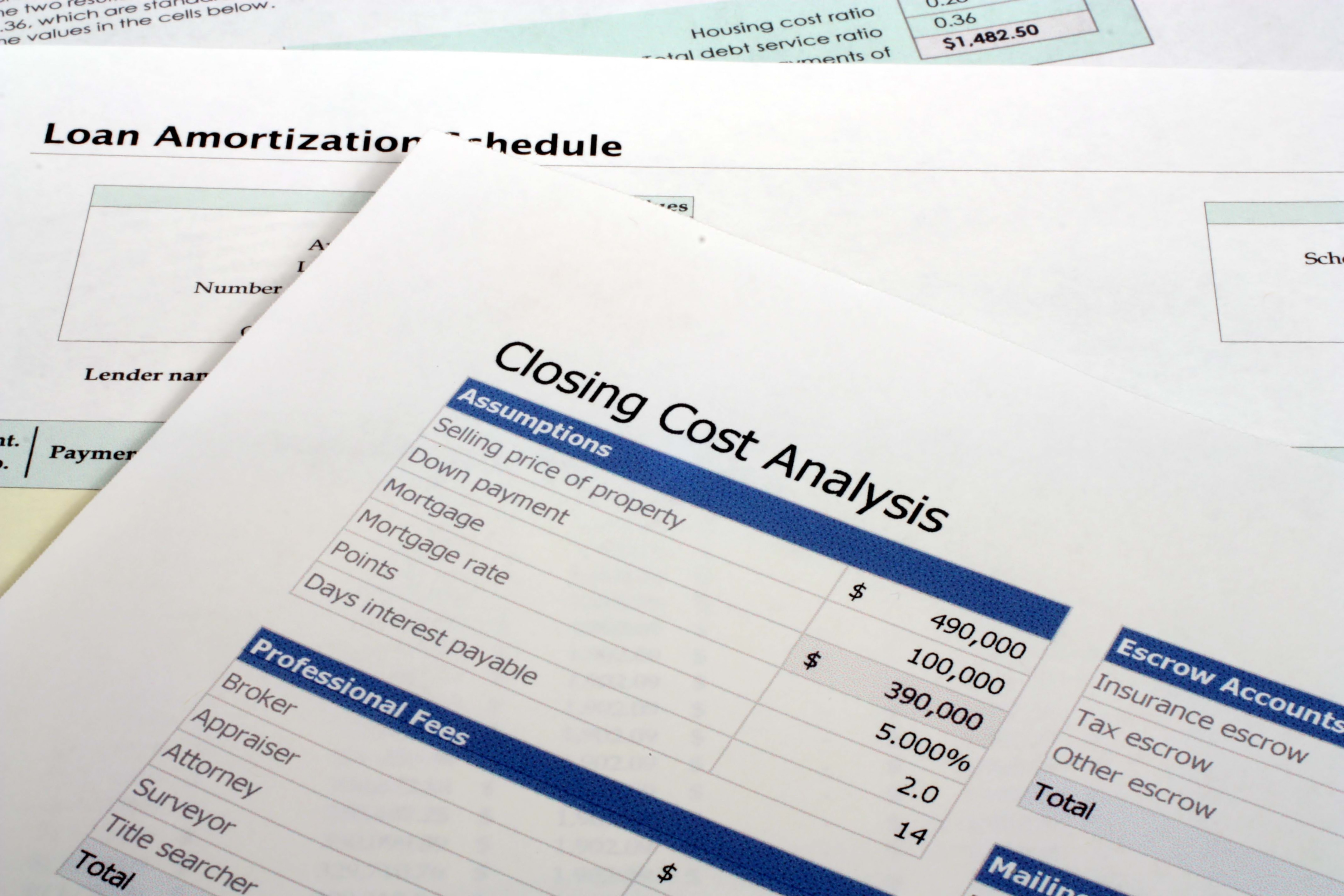
Closing costs surprise more buyers than any other part of the transaction, because they arrive on top of your down payment rather than within it. Your closing costs fall into four categories: fees we charge to originate the loan, fees outside companies charge for their services, state taxes fixed by law, and prepaid items covering your first year of ownership.
Our fees cover underwriting and funding, including origination charges, credit report fees, and the appraisal. Third-party charges cover the title search, title insurance, survey, closing agent, and county recording fees. These are the lines where comparison shopping produces real savings, since those prices vary while the state taxes do not.
Florida charges transaction taxes that buyers from other states rarely expect. Documentary stamp tax applies twice, once to the deed transferring the home and again to the mortgage securing your loan. A separate nonrecurring intangible tax applies to the mortgage amount. In most Florida counties, custom assigns the deed stamps to the seller and the mortgage stamps and intangible tax to the buyer, though your contract governs, and Miami-Dade operates under different rates. One exception is worth noting: we charge no intangible taxes or prepayment penalties on our conventional loans, which removes that line from your closing statement. The stamp taxes still apply, since the county collects those when your documents are recorded.
Escrow account explained: at closing, we establish an account holding funds for your property taxes and homeowners' insurance, and a portion of every monthly payment goes into it. You will fund several months of reserves upfront as part of your closing costs, which is why the cash required exceeds the fees alone. We review the account annually and adjust your payment when your tax bill or insurance premium changes. Florida homeowners see those adjustments more frequently than owners in most states, so expect the escrow portion of your payment to move even on a fixed-rate loan.
Seller concessions and lender credits can offset part of what you owe, and both are worth raising during negotiation rather than at the closing table. On our portfolio loans, buyers purchasing a primary residence can receive a lender credit of 2% of the loan amount, up to $5,000, toward closing costs.
Your cash to close must be documented and traceable, so where you hold that money matters more than most buyers realize. Our complete guide to checking accounts covers how to structure those accounts beforehand.
Average Closing Costs in Florida by Percentage of Home Price
Closing costs typically run 2% to 5% of your mortgage amount and are paid in addition to your down payment, and a portion of that total in Florida is fixed by state law rather than set by your lender. Florida charges a documentary stamp tax of 35 cents per $100 of the amount secured by a recorded mortgage, plus 70 cents per $100 of the sale price on the deed, and a separate nonrecurring intangible tax of 0.2% of the loan amount. On a $350,000 home purchased with a $300,000 loan outside Miami-Dade, that produces $1,050 in mortgage stamps, $600 in intangible tax, and $2,450 in deed stamps, or roughly 1.2% of the purchase price in state taxes alone. Because sellers customarily pay the deed stamps in most Florida counties, buyers typically carry about 0.55% of their loan amount in state taxes.
Fixed-Rate vs. Adjustable-Rate Mortgages: Which Option Fits Your Financial Goals
The adjustable-rate vs fixed-rate mortgage decision comes down to who carries the risk of future rate movement. A fixed-rate loan places that risk on us for the entire term. An adjustable-rate loan provides a lower starting rate and transfers that risk to you once the initial period ends.
Fixed-rate mortgages hold the same interest rate for the life of the loan, so your principal and interest payment never changes. The term you select drives both the monthly cost and the total cost. Our fixed-rate mortgage options include both terms and several in between.
Adjustable-rate mortgages begin with a fixed period, commonly five, seven, or ten years, then adjust on a schedule for the remainder of the term. Once adjustments begin, your rate equals two components added together: an index that moves with market conditions, and a margin your lender sets at application that then remains constant. Your personal finances no longer affect the rate at that point, since adjustments track the market instead.
Rate caps are the aspect of an ARM most worth understanding before you sign. The initial adjustment cap is commonly either 2 or 5 percentage points, and subsequent adjustment caps are commonly 1 or 2 percentage points, with a separate lifetime cap limiting total movement. Those three numbers define your worst case. Ask us to calculate the highest payment the loan could ever require, since that figure matters more than your starting rate.
An ARM suits buyers who expect to move before the fixed period ends, or who anticipate income growth sufficient to absorb an increase. A fixed-rate loan suits buyers who plan to stay and value knowing the number. One Florida caution applies to both: even with a fixed rate, your total payment can change, because escrowed taxes and insurance move independently. Fixed refers to your principal and interest, while the escrow portion continues to adjust. Our adjustable-rate mortgage details specify the initial periods and adjustment terms we offer.
Florida Homeowners Insurance and Property Taxes: Budgeting for True Homeownership Costs
Principal and interest are the stable part of a Florida mortgage payment. Insurance and property taxes are the parts that move, and together they often add several hundred dollars monthly beyond what buyers planned. Both sit inside your escrow.
Florida homeowners insurance costs depend more on the specific property than on the surrounding market. Your premium reflects your county, distance from the coast, roof age and material, construction type, elevation, claims history, and the coverage you select. Two houses on the same street can price very differently based on roof age alone. The Florida Office of Insurance Regulation publishes a tool showing sample average homeowners rates by county and company, drawn from approved rate filings, which provides a realistic range before you request actual quotes. Treat those samples as a starting point and obtain quotes on the specific property during your inspection period.
The hurricane deductible is the line Florida buyers overlook most, and it operates separately from your standard deductible. Insurers must offer hurricane deductible options of $500, 2 percent, 5 percent, or 10 percent of your dwelling or structure limits, and for homes insured at $250,000 or more the $500 option need not be offered. On a home insured for $350,000, those percentages translate to $7,000, $17,500, and $35,000 in out-of-pocket exposure before coverage responds after a storm. A higher percentage lowers your premium and increases the cash you must have available.
Two additional coverage points matter before closing. Documented wind mitigation features such as roof attachment, opening protection, and roof shape can reduce your premium, so ask whether a wind mitigation inspection is worth ordering. Flood damage is not covered by a standard homeowners policy and requires separate coverage.
Property taxes operate differently here than most buyers assume. Your bill equals your taxable value multiplied by the millage rates your county, school district, and other authorities set. The homestead exemption can reduce your taxable value by as much as $50,000 once you establish permanent residence and file with your county property appraiser. It also qualifies you for the Save Our Homes limitation, which caps annual increases in assessed value thereafter.
The following point catches buyers hardest. The seller's current tax bill tells you very little about yours. Assessed value resets to market value in January after a sale, and any Save Our Homes benefit the previous owner accumulated does not transfer. Budget from your purchase price multiplied by the current millage rather than the figure on the listing, and confirm your estimate with the county property appraiser.
Refinancing Your Mortgage: When It Makes Sense for Florida Homeowners
Refinancing replaces your current loan with a new one, and the decision is arithmetic rather than intuitive. A rate-and-term refinance changes your rate, your term, or both. A cash-out refinance also converts equity into cash, increasing your balance.
Break-even analysis is a reliable way to evaluate a rate-and-term refinance. Divide your total cost to refinance by your monthly savings, and the result is the number of months you must remain before the transaction pays for itself. Consider a homeowner owing $280,000 at 7.50% who refinances into a 30-year loan at 6.58%. The payment drops from approximately $1,958 to approximately $1,785, saving roughly $173 monthly. At $6,000 in lender and third-party costs, break-even arrives near month 35.
Refinancing a mortgage in Florida can carry a cost most break-even calculators do not include, and whether it applies depends on which lender you use. Move your loan to a different lender, and the state treats it as new debt, so documentary stamp tax and intangible tax both apply to the new mortgage. Remain with your existing lender, and if you are not borrowing more than you currently owe, the loan can qualify as a renewal instead. Florida exempts qualifying renewals from the documentary stamp tax when the same borrower extends the balance already owed, and a similar exemption applies to the intangible tax.
When the taxes do apply, the amounts accumulate. Florida charges 35 cents per $100 of the amount your mortgage secures, plus 0.2% of the loan amount in intangible tax. No ownership transfers in a refinance, so the 70-cent-per-$100 deed rate does not apply. On that $280,000 refinance, those two items add approximately $1,540 and push break-even from month 35 out to roughly month 44.
Cash-out refinancing follows different rules. Lenders cap the loan-to-value ratio more tightly and price the rate higher than a comparable rate-and-term refinance, since converting equity to cash increases risk. Rolling high-interest debt into your mortgage lowers the rate on that balance while extending repayment across decades and securing it against your home, so examine that trade carefully.
Several situations improve the math. FHA and VA borrowers have access to streamlined refinance programs that reduce documentation and often waive the appraisal. Conventional borrowers who have reached 20% equity can sometimes refinance specifically to eliminate mortgage insurance, and that saved premium counts toward their monthly savings. We can help you refinance for a lower payment, a lower rate, or both, and we offer cash-out options as well.
Avoiding Costly Mortgage Mistakes: Your Next Steps to Homeownership in Florida
The mistakes that cost Florida buyers the most are rarely dramatic, and nearly all are avoidable. They appear in four places: how you prepare, how you budget, how you behave during the application, and what you assume about qualifying.
Preparation mistakes compound. Touring homes before obtaining pre-approval wastes months and places you behind buyers whose financing is already verified. Accepting the first offer you receive costs nearly as much, since terms, fees, and pricing vary among lenders for identical files. Review your credit reports and dispute errors before applying, because corrections require time to post.
Budgeting mistakes hit hardest in Florida. Calculating affordability from principal and interest alone omits the two lines most likely to move your payment, and buyers who do this frequently find themselves stretched within a year. Estimating property taxes from the seller's bill produces a number that will not survive your first assessment. The most expensive version is waiting until your inspection period closes to request insurance quotes. A property with an aging roof can price far above expectations or prove difficult to insure, and discovering that after your contingencies expire leaves you without options.
Application mistakes are avoidable once you know them. Opening new credit, financing furniture, or changing jobs between pre-approval and closing can undo an approval at final underwriting. Waiving your inspection or financing contingency to win a competitive bid transfers real risk onto you. Accepting wire instructions that arrive by email, particularly instructions that change at the last minute, is the fraud that costs buyers their entire down payment, so confirm every detail by phone using a number you looked up independently.
The final mistake is the quietest. Many Florida buyers never apply for down payment assistance because they assume their income is too high, their savings are too small, or their occupation is ineligible. County income limits run higher than most people expect, and the state's largest program depends on where you work rather than your job title.
Your next step depends on where you stand. If you are building savings or improving your credit, our budgeting and financial education tools cover the fundamentals at your own pace. If you are ready to establish a price range and tour homes with credibility, our mortgage team can help you navigate the process and get you pre-approved.
Frequently Asked Questions About Mortgages and Home Buying in Florida
Can I qualify for a mortgage in Florida with no credit score or bad credit?
Often yes, though the path differs. If your credit is damaged, FHA financing usually provides the most options, accepting lower scores in exchange for mortgage insurance that typically remains for the life of the loan. If you have no score, lenders can build a credit history from rent, utility, insurance, and tuition payments and review the file manually. Our portfolio loans also carry no required waiting period after a bankruptcy, foreclosure, deed-in-lieu, or short sale. Either way, expect a larger down payment, more documentation, and a longer timeline.
What should I look for when choosing a mortgage lender in Florida?
Compare the total cost rather than the advertised rate. Obtain a Loan Estimate from each lender and set them side by side, examining origination charges, discount points, and lender credits alongside the rate, since a low rate purchased with points can cost more overall. Ask who underwrites your file and where, because local decisions resolve problems faster when your closing date is at risk. Ask which down payment assistance programs each lender can originate, since state assistance requires an approved lender.
Is it better to get a mortgage from a bank, credit union, or online lender?
Each is structured differently, and the difference is ownership. Credit unions are owned by their members and return earnings to those members rather than outside shareholders, and deposits are federally insured up to $250,000 per individual depositor through the National Credit Union Share Insurance Fund. Banks answer to shareholders and often operate larger branch networks. Online lenders compete primarily on speed and price, with less local presence. What matters most is whether the lender offers the loan type and assistance program you need.
As a credit union, we handle every part of the loan process and the decision locally rather than sending your file elsewhere. We lend to first-time buyers, current homeowners, and investors, with fixed-rate, adjustable-rate, FHA, VA, USDA, construction, condo, manufactured home, and jumbo options, plus portfolio loans we keep on our own books. Membership is required, and all loans are subject to credit approval.
Where can I find free or low-cost homebuyer education courses in Florida?
HUD-approved housing counseling agencies offer homebuyer education across Florida at no cost or low cost, online and in person. If you are pursuing state down payment assistance, select a provider approved by Florida Housing, because programs accept certificates only from approved courses and those certificates expire. Complete the course early, since assistance reservations can move faster than class schedules.
Can I use gift funds from family to cover my down payment in Florida?
Yes, and gift funds are common. Loans, grants, and gifts can add to your down payment savings, though the permitted amount and acceptable sources depend on your loan program. You will need a signed gift letter stating the money is a gift with no repayment expected, plus documentation tracing it from the donor's account to yours. Deposit gift funds well before you apply, rather than days before closing, since unexplained deposits trigger underwriting questions that delay files.
What is private mortgage insurance (PMI), and when can I stop paying it?
PMI protects the lender when your down payment is less than 20%, and it is added to your monthly payment. You can request cancellation once your balance reaches 80% of your home's original value, and your servicer must terminate it automatically when your balance is scheduled to reach 78% of the original value, provided you are current on payments. Original value generally means the lower of your purchase price or the appraised value at purchase. FHA mortgage insurance follows separate rules and typically cannot be removed this way.
How does a property's flood zone designation affect my mortgage requirements in Florida?
Your flood zone determines whether coverage is required. Homes in identified special flood hazard areas within participating communities must carry flood insurance to receive federal financial assistance, which includes federally backed and federally regulated mortgages. If your home sits in one of those zones, we must confirm coverage before closing, and it must remain in place for the life of the loan, with premiums typically escrowed alongside your taxes and insurance. Check the flood zone during your inspection period, because premiums vary substantially and affect both your monthly payment and your debt-to-income ratio.
What happens if my home appraisal comes in lower than the purchase price?
A low appraisal limits what we can lend, since your loan amount is based on the appraised value or the purchase price, whichever is lower. You generally have four options: renegotiate with the seller, cover the difference in cash, request a reconsideration of value by submitting comparable sales the appraiser may have missed, or withdraw if your contract includes an appraisal contingency. Preserving that contingency is what keeps all four available.