

Several credit card due dates, a handful of different interest rates, and minimum payments that barely move the balance. That pattern is familiar to many Florida households heading into 2027, and it tends to build quietly. An emergency car repair or a storm-season expense lands on a card, the balance lingers, and high interest makes it hard to catch up even when every payment goes out on time.
A debt consolidation loan offers a way to trade those scattered bills for one fixed payment, one rate, and a clear end date. When used with a plan, it can reduce the total interest a borrower pays and make the monthly budget easier to manage. Used without one, it can clear the cards just in time for a new round of spending, which is why understanding how these loans work, when they fit, and what lenders look for matters before applying.
Why Debt Consolidation Is One of the Most Effective Ways to Manage Debt in Florida
Credit card debt is expensive because of the way it's structured. Revolving balances carry variable rates, have no fixed payoff date, and grow whenever new purchases land on top of old ones. Americans ended 2025 with $1,324.3 billion in revolving consumer credit, and minimum payments on that kind of debt keep accounts in good standing while stretching repayment over years.
A debt consolidation loan changes that structure. It uses a single-installment loan to pay off several balances, replacing them with one monthly payment, a single interest rate, and a set number of months until the debt is gone. A borrower with a 48-month loan knows exactly when the final payment falls, which makes progress easy to track and easier to stick with.
Fewer due dates also means fewer chances to miss one. On-time payment history carries more weight in a credit score than any other factor, so simplifying the monthly bill schedule can protect a borrower's credit while the balance comes down. When the new loan carries a lower rate than the cards it replaces, more of each payment goes toward principal, which shortens the path out of debt.
For Florida households, timing matters too. Storm season, insurance renewals, and summer utility bills can all push unplanned expenses onto a credit card, and those balances tend to linger long after the original bill is paid. Florida residents also have access to member-owned lenders such as Florida Credit Union, which serves a 48-county field of membership across north and central Florida and offers personal loans with fixed rates and fixed monthly payments.
The strategy works best with a plan behind it. Consolidation reorganizes debt without erasing it, so the borrowers who get the most out of it are the ones who stop adding new balances to the cards they just paid off.
How many Americans pay off their credit cards in full every month?
Just 53% of Americans surveyed say they always pay their credit card bills in full each month, a share that dropped by 6 percentage points between the 2021 and 2024 survey waves. The rest carry at least part of the balance in some months, with interest accruing on top of any new purchases. For borrowers in that group, moving revolving balances into a fixed-rate installment loan puts a defined end date on debt that would otherwise have no end date.
What Is a Debt Consolidation Loan and How Does It Work?
A debt consolidation loan is a personal loan used to pay off several existing debts at once, leaving the borrower with one new loan to repay. The name describes what the money does. Most are unsecured installment loans, which means they require no collateral, carry a fixed interest rate, and are repaid in equal monthly payments over a set term. Some lenders offer a dedicated consolidation product, while others allow borrowers to use a standard personal loan for the same purpose.
The process follows a predictable sequence. A borrower starts by listing every balance they plan to pay off, along with each account's interest rate and monthly payment, then applies for a loan large enough to cover the total. Once approved, the lender either sends payments directly to the creditors or deposits the funds into the borrower's account so they can pay each balance themselves. The old accounts drop to zero, and the borrower makes one payment each month to the new lender until the loan is paid in full.
Three factors shape how well the loan performs. The interest rate sets the cost of borrowing, the loan term sets how many months repayment takes, and any fees raise the true annual cost reflected in the APR. A longer term lowers the monthly payment but usually increases total interest, while a shorter term raises the payment and cuts the interest owed. The strongest fit is typically the shortest term the budget can comfortably handle.
Unsecured personal loans aren't the only route. Homeowners can also consolidate with a home equity loan or home equity line of credit, which is secured by the home's value and often carries lower rates because the property secures the debt. That lower rate comes with added risk, since falling behind on payments could put the home itself on the line. Florida Credit Union lists personal loans, balance transfers, home equity loans, HELOCs, and loan refinancing among its consolidation options, giving members several ways to structure the move based on their equity, credit, and comfort with collateral.
When Does a Debt Consolidation Loan Make Sense for Florida Borrowers?
A debt consolidation loan makes the most sense when two things line up: the new rate, after fees, is lower than the average rate across the debts it replaces, and the fixed monthly payment fits comfortably within the budget. A borrower carrying three credit cards with rates in the high teens and low twenties who qualifies for a personal loan at a low-teens rate stands to save a meaningful amount in interest. A borrower whose offer lands close to what they already pay may end up with a simpler bill schedule but little real savings, so comparing the numbers side by side before applying is the first step.
The type of debt matters as well. Consolidation works especially well for multiple high-interest credit card balances, medical bills that were charged to cards, and short-term, high-cost loans such as payday loans, which tend to roll over into repeated renewals. Florida households often see these balances build after a large unplanned expense, such as a hurricane deductible, emergency roof or AC repair, or a sudden move, where the card was the fastest way to cover the bill. Rolling those balances into one installment loan puts a firm end date on debt that might otherwise linger for years.
A borrower's financial footing also shapes whether consolidation pays off. Lenders price unsecured loans largely on credit history and debt-to-income ratio, so steady income and a track record of on-time payments tend to earn the rates that make the move worthwhile. The total balance should also be something the borrower can realistically clear within a typical personal loan term of a few years. If paying it off would take longer than that, even at a lower rate, the loan may only spread the problem out over more months.
Spending habits carry just as much weight as the rate. When debt grows because spending regularly outpaces income, a consolidation loan is unlikely to fix the underlying problem unless the budget changes, too. The most common trap is paying off credit cards with a new loan and then letting those same balances creep back up, which leaves the borrower with a loan payment and fresh card debt at the same time. Borrowers who keep paid-off cards out of their wallets, set aside even a small emergency fund, and track spending closely for the first few months give the loan its best chance to work.
Some situations call for a different approach. A small balance that a focused budget could clear within a few months may not justify the cost of an application or processing fee. Borrowers who have already fallen far behind, or whose total debt exceeds what they could repay within about five years, may get more from a nonprofit credit counselor who can review the full picture and help set up a debt management plan. In those cases, stabilizing the budget first and revisiting consolidation later often leads to a better rate and a more manageable payment.
How Does Debt Consolidation Affect Your Credit Score?
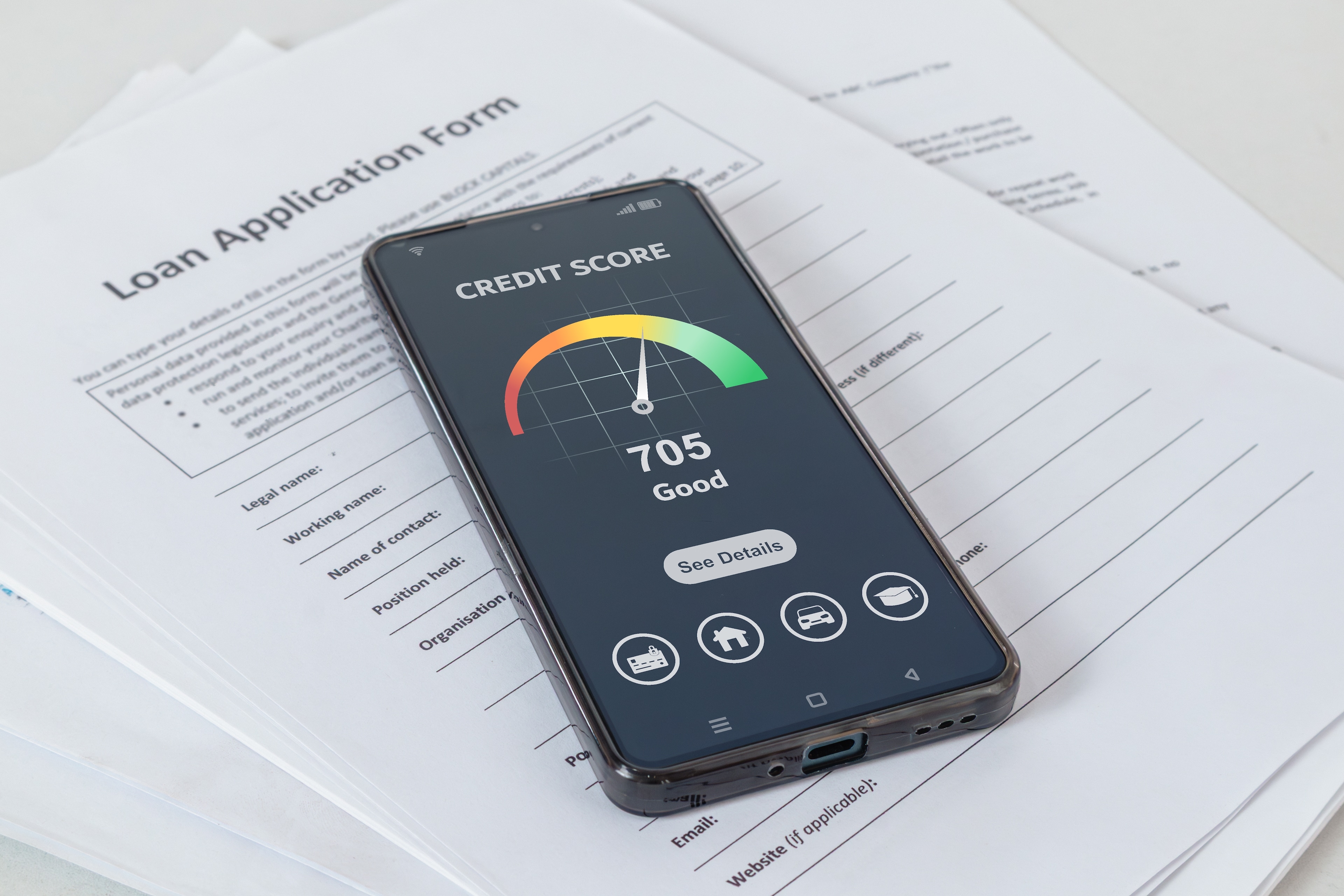
Debt consolidation usually causes a small, temporary dip in a credit score followed by steady improvement, as long as the borrower keeps up with payments. The dip comes from the application and the new account. A formal loan application triggers a hard inquiry on the borrower's credit report, and opening a new loan lowers the average age of their accounts. Both effects are modest and fade over time, and many lenders offer prequalification with a soft inquiry, which lets borrowers preview potential rates without affecting their score.
The gains tend to show up within a few billing cycles. Once the loan pays off revolving balances, the borrower's credit card utilization (the share of available card credit currently in use) drops sharply. Scoring models weigh utilization heavily, so moving balances from cards to an installment loan can lift a score even though the total amount owed hasn't changed. Adding an installment loan to a profile made up mostly of credit cards can also broaden the borrower's credit mix, a smaller factor in most scoring models.
Payment history drives the biggest long-term change. About 35% of a FICO Score is based on payment history, making a record of on-time loan payments one of the most effective ways to rebuild credit. Trading several due dates for one reduces the chance of a missed payment, and each on-time month adds to that record. A single late payment on the new loan can undo much of that progress, so setting up automatic payments from a checking account is a smart step right after closing.
What borrowers do with the paid-off cards also matters. Closing old accounts reduces total available credit, which can push utilization back up and shorten the average account age. Keeping them open with a zero balance usually helps the score, but that only works for borrowers who can leave those cards unused. For anyone worried about running the balances back up, keeping one older card open for a small recurring charge paid in full each month and storing the rest out of reach can protect the score without inviting new debt.
How much of a FICO Score depends on the amount of debt someone owes?
Amounts owed make up 30% of a FICO Score, second only to payment history at 35%. Within that category, utilization of revolving accounts, such as credit cards, carries significant weight, since high balances relative to credit limits can signal that a borrower is stretched thin. Paying off card balances with a debt consolidation loan lowers utilization right away, which can lift a score as soon as the card issuers report the new zero balances.
What Do You Need to Qualify for a Debt Consolidation Loan in Florida?
Qualifying for a debt consolidation loan comes down to three factors lenders weigh: credit history, income, and the amount of debt a borrower already carries relative to that income. Florida has no single statewide approval standard, and each lender sets its own criteria, so the same applicant can receive different offers from different institutions. Knowing what lenders review ahead of time helps borrowers apply with confidence and identify areas to strengthen before submitting an application.
Credit history shapes both approval and pricing. Lenders review payment records, current balances, account age, and any recent late payments or collections to estimate a borrower's likelihood of repayment. A stronger credit profile generally earns a lower rate, which matters because the rate determines whether consolidation saves money in the first place. Borrowers with thinner or damaged credit can still qualify with many lenders, often at a higher rate or for a smaller amount. Reviewing credit reports before applying gives borrowers a chance to dispute errors and see where they stand.
Income and debt-to-income ratio carry equal weight. Lenders verify income through recent pay stubs, W-2s, or tax returns for self-employed borrowers, then compare total monthly debt payments to gross monthly income. A lower ratio signals more room in the budget for a new payment and can support a larger loan amount. At Florida Credit Union, personal loans are subject to credit approval and income verification, and the maximum loan size depends on the borrower's credit history, debt-to-income ratio, and other factors.
Having paperwork ready keeps the process moving. Applicants should expect to provide the amount they want to borrow and their preferred term; contact details, including their Social Security number and address; current employer and income information; and details for a co-applicant if they're applying jointly. A list of every debt they plan to pay off, with account numbers, balances, and payoff addresses, speeds up disbursement once the loan closes. Adding a co-applicant with a steady income and solid credit can also strengthen an application for borrowers who fall short on their own.
For credit unions, membership is part of the equation. Credit unions lend to their members, so borrowers who don't already belong typically join the credit union as part of the process. FCU membership is open to residents within its field of membership across north and central Florida, and the credit union makes lending decisions within minutes in most cases, letting applicants know quickly where they stand and what their consolidation options look like.
Debt Consolidation Loan vs. Balance Transfer: Which Is Better for Florida Residents?
Both tools move high-interest debt to a cheaper place, but they're built for different situations. A debt consolidation loan is an installment loan with a fixed rate, a fixed monthly payment, and a set payoff date. A balance transfer moves existing credit card balances onto another card, usually one offering a lower rate for a limited promotional period. The better choice depends on how much a borrower owes, what kind of debt it is, and how quickly they can realistically pay it down.
A balance transfer is typically best for smaller credit card balances that can be cleared within the promotional window. When the borrower pays off the full transferred amount before the promo ends, the savings can be significant even after the transfer fee, which is usually a percentage of the amount moved. At Florida Credit Union, the fee is 3% of the transferred balance or $5, whichever is greater, so moving $8,000 would cost $240 upfront. Borrowers should weigh that cost against the interest they'd save during the promotional period before deciding.
The tradeoffs show up once the promotional period ends. Any balance left over begins accruing interest at the card's regular rate, which can climb well above what a personal loan would have charged. Purchases added to the card after the transfer may also start accruing interest right away unless the full statement balance is paid each month, and a payment more than 60 days late can cost the borrower the promotional rate entirely. A balance transfer is generally used to consolidate credit card debt, and the amount a borrower can transfer is limited by the available credit on the new card.
A debt consolidation loan tends to be better suited to larger balances or a mix of debt types. It can pay off credit cards, medical bills, and other high-interest loans in one step, and the fixed rate means the payment won't change partway through. Because the loan has a defined term, every on-time payment moves the borrower toward a known payoff date with no rate increase waiting at the end. A personal loan rate may start higher than a promotional card rate, but for balances that will take more than a year or two to repay, that predictability often wins out.
Some borrowers use both. A borrower might move one smaller card balance to a low-rate card they can clear quickly, then roll the remaining debts into a consolidation loan with a multi-year term. FCU offers each of these options, and members can request a transfer to a new or existing FCU card by phone or at a branch. Most transfers are processed within a week, though some take up to 30 days, so borrowers should keep making payments on the old card until the transferred amount posts.
How long does a balance transfer promotional rate last?
A balance transfer promotional rate must remain in effect for at least 6 months under federal rules, unless the cardholder is more than 60 days past due on a payment. Many offers run longer than that minimum, and the card agreement lists the exact end date along with the regular rate that applies afterward. Dividing the transferred balance by the number of promotional months shows the monthly payment needed to clear it before the higher rate kicks in.
How Much Can Florida Borrowers Save With a Debt Consolidation Loan?
Savings from a debt consolidation loan come down to three numbers: the gap between the old rates and the new one, the length of the loan term, and any fees built into the APR. The wider the rate gap, the more of each payment goes toward principal instead of interest. For Florida borrowers carrying balances on cards that charge rates in the 20s, even a moderate drop to a low-teens personal loan rate can cut thousands of dollars from the total repayment cost.
The loan term shapes savings almost as much as the rate. As an example, a borrower who consolidates $10,000 at 12% over 36 months would pay about $332 a month and roughly $1,957 in total interest. Stretching the same loan to 60 months drops the payment to about $222, but total interest climbs to around $3,347. The longer term offers breathing room in the monthly budget, while the shorter term keeps more money in the borrower's pocket over the life of the loan. Choosing the shortest term the budget can comfortably support usually delivers the best result.
Comparing the loan against the status quo shows where the biggest savings come from. Using the same example, a borrower who kept that $10,000 on a card charging 22% and paid the same $222 each month would need about eight years to clear the balance and would pay more than $11,000 in interest along the way. The consolidation loan finishes about three years sooner at less than a third of the interest cost, and its fixed payment means the math holds steady from the first month to the last.
Fees and payoff flexibility round out the picture. Application or processing fees add to the cost of borrowing and are reflected in the APR, so comparing offers by APR gives borrowers a truer side-by-side view than comparing interest rates alone. Paying ahead can reduce interest further, and Florida Credit Union personal loans carry no penalty for paying off the loan early, which lets borrowers apply a tax refund or bonus toward the balance at no extra cost. Before applying, borrowers can plug their own balances and rates into a debt consolidation calculator to see how their current payoff path compares with a consolidation loan.

How much interest can a debt consolidation loan save on $15,000 in credit card debt?
Consolidating $15,000 in credit card debt could save nearly $5,000 in interest over five years, based on the Federal Reserve's second-quarter 2026 averages of 22.15% on credit card accounts assessed interest and 11.86% on 24-month personal loans. Repaid over the same 60-month schedule, the credit card balance would cost about $9,934 in interest at a monthly payment of roughly $416, while the personal loan would cost about $4,956 at roughly $333 a month. That works out to about $4,977 in total savings and an $83 lower monthly payment.
How FCU Helps Florida Residents Consolidate Debt and Take Back Financial Control
Florida Credit Union has served members across north and central Florida since 1954, and its approach to debt consolidation starts with giving borrowers more than one way to get there. Members can choose from a debt consolidation loan, a balance transfer to a lower-rate FCU credit card, a home equity loan or HELOC, or refinancing an existing loan from another lender. Having each option under one roof lets members compare fixed and promotional rates, secured and unsecured borrowing, and short and long terms with the same team, then pick the structure that fits their balances and budget.
For borrowers who choose a personal loan, FCU builds in flexibility around the fixed rate and fixed payment. Members can borrow from $3,001 to $50,000 in one lump sum, select a term from 18 to 60 months, and complete the process from application to funding at home with an electronic signature, with decisions provided within minutes in most cases. Once the loan is in place, members can choose a payment date that aligns with payday, pay up to 6 months in advance, and pay off the loan early without penalty. FCU's Skip-A-Pay option allows members to skip up to two payments per year when money is tight, though interest continues to accrue on skipped payments. Members can also add loan payment protection, which covers payments in the event of a covered member's disability or death, with the premium folded into the regular loan payment.
Guidance comes along with the financing. FCU provides free credit counseling and a free credit report analysis at a local branch that takes less than 30 minutes, and members only need to bring an ID. During the review, an FCU representative walks through the member's credit report and helps identify ways to improve their score, lower monthly payments, and pay down high-interest debt. Members also receive free monthly access to their FICO Score, which makes it easy to watch utilization drop and build an on-time payment history in the months after consolidating.
FCU also offers tools that help members avoid sliding back into high-cost debt. When a gap between paychecks threatens to push a bill onto a card or toward a payday lender, members can turn to Early Check Advance® loans of up to $550, which FCU designs as an affordable alternative to payday loans and allows members to repay by their next paycheck. Combined with a consolidation loan and a clear budget, these options give members a practical way to break the cycle that often leads to multiple high-interest balances in the first place.
Getting started requires membership, which is open to residents within FCU's 48-county field of membership. Florida residents can apply online, call 800-284-1144 to speak with a service representative, or visit a branch to talk through their consolidation options in person.
Frequently Asked Questions About Debt Consolidation Loans in Florida
What is the difference between debt consolidation and debt settlement?
Debt consolidation combines existing balances into a single new loan that the borrower repays in full, while debt settlement seeks to convince creditors to accept less than the full amount owed. Settlement carries greater risks, since settlement companies often charge steep fees and tell clients to stop paying their bills, leading to late fees, collection activity, and credit damage. Any amount a creditor forgives is also generally treated as taxable income by the IRS. Florida law adds some protection by capping what debt management and credit counseling providers can charge residents at $50 for initial setup and the lesser of 15% of the monthly payment or $75 a month for ongoing services.
What credit score do I need to get a debt consolidation loan in Florida?
Florida doesn't set a minimum credit score for debt consolidation loans, so each lender establishes its own standards. Higher scores generally qualify for lower rates, which is what makes consolidation pay off, but borrowers with fair or rebuilding credit can still qualify with many lenders. Florida Credit Union weighs credit history alongside income and debt-to-income ratio, and it offers personal loans to members across the credit spectrum.
Will a debt consolidation loan hurt my credit score?
A debt consolidation loan may cause a small, temporary dip from the hard inquiry and the new account, but it often improves a score over time. Paying off credit cards lowers utilization, and a steady record of on-time loan payments strengthens payment history, the most heavily weighted scoring factor. Keeping paid-off cards open with a zero balance and setting up automatic loan payments helps protect those gains.
How much debt can I consolidate with a personal loan?
The amount depends on the lender's limits and the borrower's credit history, income, and existing debt. At Florida Credit Union, personal loans range from $3,001 to $50,000, and the maximum any individual member can borrow depends on their credit history, debt-to-income ratio, and other factors. Borrowers with balances above their approved amount can pay off their highest-rate debts first and tackle the rest with a separate strategy.
Is it better to consolidate debt with a personal loan or a balance transfer card?
A balance transfer card usually works better for smaller credit card balances that can be paid off before the promotional rate ends. A personal loan is often the stronger choice for larger balances, a mix of debt types, or payoff timelines longer than a year or two, since its fixed rate and set term won't change partway through. Comparing the transfer fee and the card's post-promo rate against a loan's APR shows which option costs less for a specific situation.
How long does it take to pay off debt with a consolidation loan?
Most debt consolidation loans are repaid over two to five years, depending on the term the borrower selects. FCU personal loans offer terms of 18 to 60 months, and members can pay ahead or pay off the loan early without penalty. Choosing the shortest term the budget can comfortably handle clears the debt faster and keeps total interest lower.
Can I consolidate debt with bad credit in Florida?
Borrowers with damaged credit can still consolidate in some cases, though they may receive a higher rate or a smaller loan amount. Adding a co-applicant with strong credit and steady income can improve approval odds and pricing, and homeowners with equity may qualify for a secured option such as a home equity loan. FCU members can also use the credit union's free credit report analysis to identify steps that could strengthen their credit before applying.
What types of debt can I consolidate with a personal loan?
Personal loans can typically consolidate unsecured debts such as credit cards, store cards, medical bills, payday loans, and other personal loans, and FCU also lists student loans among the high-interest debts members can roll into a consolidation loan. Borrowers with federal student loans should weigh that move carefully, since paying them off with a private loan ends access to federal benefits such as income-driven repayment and forgiveness programs. Secured debts, such as mortgages and auto loans, are usually handled through refinancing instead.
How do I know if debt consolidation is right for me?
Debt consolidation is usually a good fit when the new loan's APR is lower than the average rate on current debts, the monthly payment fits the budget, and the full balance can be repaid within about five years. It also works best for borrowers who have a plan to avoid running up new balances on paid-off cards. If spending regularly outpaces income, or the debt feels unmanageable at any rate, starting with a budget review or a nonprofit credit counselor may be the better first step.
Does a credit union offer better rates for debt consolidation than a bank?
Credit unions often offer lower rates, with a national average of 10.64% on 36-month unsecured fixed-rate loans compared with 12.00% at banks in late 2025. Because credit unions are member-owned and not-for-profit, they tend to return earnings to members through lower loan rates and fees. Individual rates still depend on credit history, loan amount, and term, so comparing personal offers side by side remains the best way to find the lowest cost.