

Building a Florida home takes nearly a year from permitting to move-in, so this fall's financing decisions dictate a family's 2027 home and payments. While existing land ownership often makes projects viable, many families are stalled because construction loans function completely differently from traditional mortgages.
Financing occurs in two phases. During construction, funds are released in installments as milestones are met, and the borrower pays interest only on the amounts drawn. Upon completion, the loan converts to, or is replaced by, a permanent mortgage, a choice that determines closing costs, rate, and payment certainty.
Florida adds specific complexities: strict building codes, wind mitigation insurance impacts, county-specific fees, strict lien laws requiring diligent tracking, and hurricane season timelines. Establishing the right financing structure early prevents these unique variables from causing mid-build budget issues.
Why More Florida Homeowners Are Choosing to Build Instead of Buy in 2027
Florida's housing market has pushed more people toward building rather than shopping. Custom homes, meaning houses built for owner occupancy on land the owner already controls, accounted for 17.5% of single-family home starts in 2024, or 176,932 homes nationally. That segment works on completely different math than production housing. The decision starts with a lot and a floor plan instead of a listing, which changes what the buyer is competing for and who they are competing against.
Existing inventory is part of the reason. Much of the housing stock across North and Central Florida was built decades ago, and buying an older home often means taking on a roof, an HVAC system, and electrical service that are already partway through their useful life. Building lets owners set the specifications on the front end and skip the renovation process that often follows resale purchases. For families who plan to stay in the home long term, that trade looks better every year the roof budget gets closer.
Insurance carries real weight here, too. New construction is built to the current Florida Building Code, and insurance companies in Florida are required by law to offer mitigation discounts or credits for wind-resistant features like roof-to-wall connections, secondary water resistance, and impact-rated openings. On a new build, those features get designed in rather than added later as a retrofit project with its own permit and contractor.
Land ownership is the other driver lenders regularly see among borrowers. Plenty of Florida families already hold a lot, inherited acreage, or a parcel bought years ago with the intent to build eventually, and that land can do real work in the financing. The catch is the calendar. Plans, permits, builder selection, and financing all have to line up in 2027 for a home that will be finished between that year and the next one, which is why the timeline conversation usually happens before the loan conversation.
Building is not the right call for everyone. Borrowers take on schedule risk, material pricing risk, and a rainy season that can stall a foundation pour for weeks, and the financing works nothing like a standard purchase mortgage.
How long does it take to build a house in Florida?
Nationally, building a single-family home takes about 9.1 months on average, from permit authorization to completion, which breaks down to 1.4 months between authorization and the start of construction, plus another 7.6 months of actual construction. Custom projects run longer than that average. Homes built by hired contractors took roughly 12 months from authorization to completion, and owner-built homes took the longest at 15.1 months. For a Florida borrower, that timeline is why construction loans include a defined construction phase, usually 12 months, before converting to permanent financing.
What Is a Construction Loan and How Is It Different From a Traditional Mortgage?

Funds are released in stages based on inspected and completed work, protecting both parties from project stalls. Interest-only payments grow over time, applying only to the amount drawn, not the full loan amount. Lenders evaluate plans and builders alongside personal financials to mitigate pricing and completion risks. Under Regulation Z, these deals have two phases, which may be disclosed together or separately. A single-close structure locks in the rate upfront, while a two-close option requires separate transactions.
Federal disclosure rules treat the arrangement the same way lenders do. Under Regulation Z, construction loans that may be permanently financed have two distinct phases, similar to two separate transactions, which is why terms may be disclosed either as one combined loan or as two. Florida Credit Union's construction-to-permanent financing settles both phases at a single closing, and the permanent rate is locked before construction starts. In a two-close structure, the permanent mortgage is a second transaction with its own approval, closing costs, and rate, set to whatever the market is doing when the house is done.
What types of construction loans are available to Florida homebuyers in 2027?
Construction financing comes in a handful of structures, and the one that fits depends on whether the borrower already owns land, who is managing the build, and how much closing cost exposure they want to carry.
Construction-to-permanent financing, often called a one-time close, is the most common choice for people building a primary residence. The construction phase and the permanent mortgage are approved and settled together at a single closing, then the loan converts once the certificate of occupancy is issued. Borrowers pay one set of closing costs, and the permanent rate is set before construction begins, which removes the risk of finishing the house in a higher-rate environment.
A two-time close splits that into separate transactions. The borrower takes a short-term construction loan, usually 12 months, then applies for a permanent mortgage when the build wraps up. The second approval means a second set of closing costs, a second underwriting review of credit and income, and whatever rate the market offers at conversion. Some borrowers accept that trade because they expect rates to fall or because their income picture will look better in a year.
Land and construction combinations matter in Florida, where plenty of buyers find the lot before they find the builder. If the borrower is purchasing the parcel and building on it, financing can cover both. If they already own the land outright, the equity in it can go toward the down payment and other costs, which is one of the more useful features of Florida Credit Union's construction and land loan program.
Owner-builder loans apply when a borrower plans to act as their own general contractor rather than hiring one. Lenders treat these as higher risk; requirements are tighter, and many institutions do not offer them at all. Florida also regulates who can pull permits as an owner-builder, which limits this path more than most people expect.
Manufactured and modular home financing is its own category. A modular home built to the Florida Building Code is financed much like a site-built house, while manufactured housing follows different rules. Florida Credit Union finances manufactured home and land packages, including single-wide options, which is not standard across the industry.
Government-backed building options exist as well. VA-approved lenders can assist with construction-to-permanent financing, and in many cases, the construction is financed first and later refinanced into a VA home loan, since fewer lenders participate in the construction phase. FHA has a comparable structure, though availability varies by lender.
What Credit Score, Down Payment, and Income Do Borrowers Need for a Construction Loan in Florida?
Construction financing requires more of a borrower than a standard purchase mortgage, because the lender is underwriting a plan rather than a property. Credit, down payment, income, and the builder are all reviewed together, and weaknesses in one area usually show up as tighter requirements elsewhere.
On credit, most construction lenders look for a stronger profile than they would accept on a purchase loan, since there is no finished house to fall back on if the project stalls. Florida Credit Union does not publish a single cutoff score; approval depends on the full picture rather than a single number. Florida Credit Union also has no waiting period for bankruptcy, foreclosure, or short sale on construction financing, whereas most institutions have stricter waiting periods.
Down payment is where expectations need adjusting. Construction lending across the industry has historically leaned on 20 to 25% down, and that is still what many borrowers are quoted. Florida Credit Union offers up to 100% financing on primary residences, subject to credit approval, which changes the math for members who have the income and credit to support the loan but not a six-figure cash reserve. If a borrower owns their lot, that land can be used to cover the down payment and other costs instead of cash out of pocket.
How the ratio gets calculated trips people up more than the percentage itself. On a construction loan, loan-to-value is based on the appraised value of the home as completed rather than what exists on the lot today, and lenders compare that figure against the total cost to build plus lot acquisition. Under Fannie Mae guidelines for single-closing construction-to-permanent loans, the construction period cannot run longer than 12 months in any single stretch, with total time capped at 18 months, so the schedule the builder commits to has underwriting consequences.
Income review follows familiar territory with one addition. Two years of documented income, current pay stubs, tax returns, and verification of employment all apply, and the debt-to-income ratio gets calculated the same way it would on any mortgage. The wrinkle is that many borrowers are carrying a current housing payment while the new home goes up, and that payment counts against the ratio unless the existing home sells first. Planning for that overlap early tends to be the difference between a smooth approval and a restructured budget halfway through.
How Does the Draw Schedule Work During the Construction Phase in Florida?
A draw schedule is the payment plan for a build. Instead of releasing the loan at closing, the lender divides it into installments tied to construction milestones, with each installment released after the work for that milestone is completed and verified. The borrower and their builder agree to that schedule before construction starts, and it becomes part of the loan file.
Most Florida schedules follow the same construction sequence. The first draw typically covers site work, permits, and the slab. Framing and dry-in come next, which matters more here than in most states because getting a roof on before afternoon storms and hurricane season protects everything underneath it. Mechanical rough-ins, drywall, and interior finishes, then final completion, round out the remaining draws.
Verification stands between each milestone and the money. Before releasing a draw, the lender orders a progress inspection to confirm the work was actually completed as described, and the funds go directly to the builder rather than into the borrower's account. Florida Credit Union makes payments to the builder at agreed-upon key points throughout the process, keeping the disbursement schedule aligned with actual progress rather than promised progress.
The interest payment climbs as the draws add up. Interest applies only to the balance released so far, so a payment on the slab draw is a fraction of what will be owed once framing, mechanicals, and finishes have all been funded. Borrowers should budget for the back half of the build rather than the first month, especially if they are also covering rent or an existing mortgage during construction.
The final draw usually waits on the certificate of occupancy and a completion inspection. Under Fannie Mae requirements for construction-to-permanent loans, all construction work must be completed and paid for, and any liens or claims that could become liens must be satisfied before the permanent financing can be delivered. That is why lenders collect lien releases along the way instead of sorting them out at the end.
What is a Notice to Owner in a Florida construction project?
A Notice to Owner is a written notice from a subcontractor, supplier, or other lienor telling the property owner they are working on the property and may claim a lien if it goes unpaid, and Florida law requires it to be served before starting work or no later than 45 days after starting to furnish labor or materials. Receiving one is routine on a custom build and does not mean anything has gone wrong. What matters is tracking every notice received and confirming that each party signed a lien release before the corresponding draw is paid, since a paid general contractor who did not pay a subcontractor can still leave a lien attached to the finished home.
What Costs and Fees Should Florida Borrowers Expect With a Construction Loan?
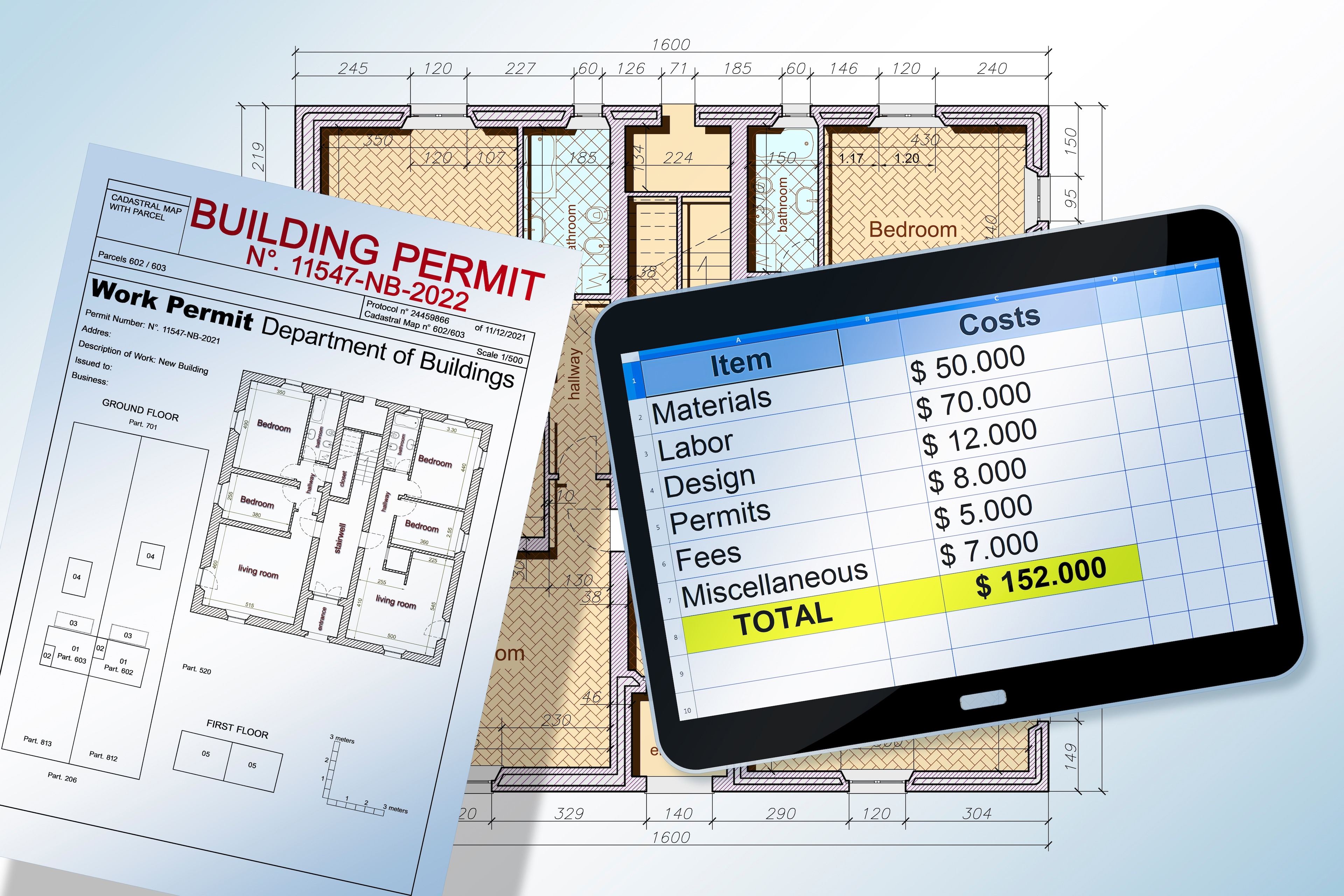
Construction financing carries the same closing costs as a mortgage does, plus a handful of charges tied specifically to building. Knowing which is which helps borrowers compare offers, since lenders package these differently.
Loan-level charges come first. Origination fees, credit reporting, title work, and title insurance all apply as they would for a purchase. Florida Credit Union charges no upfront application fee on construction financing, which matters since borrowers are already paying for plans, surveys, and permits before a single shovel hits dirt.
Appraisals work differently and usually cost more. The appraiser values the home as completed using the plans, specifications, and builder contract rather than walking a finished house, and a second visit is required at the end to confirm the home was built to those plans. Inspection fees add up, since most lenders order a progress inspection before releasing each draw, and those charges either get itemized per draw or bundled into the construction fee.
Two reserves deserve attention because borrowers rarely budget for them. An interest reserve covers the interest-only payments during construction, and some loans build that into the loan amount, so the borrower is not paying out of pocket while also covering rent or an existing mortgage. A contingency reserve sits above the contract price to cover change orders, material price fluctuations, and the surprises that come with excavation. If a build finishes without the reserve being touched, the unused portion typically reduces the loan balance rather than being returned as cash back.
Permit and impact fees vary widely across Florida and are worth pricing early. Impact fees in fast-growing counties across Central and North Florida can run into five figures on a single-family home, and they are assessed by the local jurisdiction rather than the lender, so they belong in the project budget rather than the closing costs estimate.
Closing structure drives the biggest avoidable expense. A two-close construction loan means paying title, recording, and origination charges twice, once for the construction loan and again when the permanent mortgage closes. A one-time close settles both phases in a single transaction, which is why the structure gets recommended so often for primary residences.
How much are closing costs on a construction loan in Florida?
Florida borrowers pay a documentary stamp tax of 35 cents per $100 of the amount secured by the mortgage, on top of standard closing costs. This amounts to $1,400 on a $400,000 construction loan and applies at recording. That charge adds to origination, title, appraisal, survey, and inspection fees. The number to focus on when comparing offers is how many times it is paid, because a two-close structure triggers recording and title charges twice, while a one-time close triggers them once.
How Do Construction Loan Rates Compare to Traditional Mortgage Rates in Florida?
Construction financing is generally priced higher than a standard purchase mortgage, and the reason comes down to collateral. A lender making a purchase loan holds a finished house that it could sell if the loan defaults. A construction lender holds a lot, a set of plans, and a contract, and that gap gets priced into the rate.
How much higher the rate is depends on the loan structure. On a one-time close, the permanent rate is set before construction begins, and the construction phase carries its own pricing, often floating above the permanent rate. On a two-close, the construction loan is priced as short-term financing while the permanent mortgage gets priced separately at whatever the market offers when the home is finished. Neither approach is automatically cheaper, and the comparison depends on where rates move during the build.
Rate lock timing is the part worth thinking hardest about. Locking in the permanent rate up front removes the risk of finishing a 10-month build into a higher-rate environment, and it lets a borrower underwrite the permanent payment before breaking ground. The trade is that the borrower gives up the chance to catch a lower rate later. Borrowers who expect rates to fall sometimes accept the two-close structure specifically to keep that option, though they take on the second approval and second set of closing costs to do it.
One thing the industry does not publish is the average national construction loan rate. Regulators and rate surveys track mortgage pricing rather than construction pricing, so anyone quoting a precise construction rate benchmark is extrapolating. Comparing actual quotes from lenders who originate these loans is more reliable than relying on a published index.
A borrower's credit profile, loan-to-cost ratio, and the strength of their builder all move pricing as much as market conditions do. A borrower with a large land equity position and an experienced licensed builder presents a different risk than an owner-builder starting from a raw lot, and rate sheets reflect that.
Are construction loan rates higher than mortgage rates in Florida?
Construction loan rates typically run above conventional mortgage rates, and the most useful benchmark for gauging the spread is the weekly Freddie Mac Primary Mortgage Market Survey, which tracks average 30-year fixed rates nationally. Borrowers can compare any construction quote received against that week's survey number to see what premium is being charged for the construction phase. The permanent rate on a construction-to-permanent loan governs the payment for the next 30 years, so the construction-phase premium applies to a much shorter window than the loan's full term.
How FCU Helps Florida Residents Finance Building a Home From the Ground Up

Florida Credit Union built its construction program around the structure that costs borrowers the least: one loan, one closing. Its construction-to-permanent financing funds the build and then converts into the borrower's permanent mortgage without a second closing, a second application, or a second round of title and recording charges. The permanent rate gets locked before construction starts, so the borrower knows what the payment will be before the certificate of occupancy is issued.
Florida Credit Union offers up to 100% financing for primary residences, subject to credit approval, and fixed- or variable-rate options for the permanent phase. If a borrower already owns a lot, that land can cover the down payment and other costs rather than coming out of savings. There is no upfront application fee, or waiting period after a bankruptcy, foreclosure, or short sale, which opens the door for members who have rebuilt their credit and been turned away elsewhere.
The construction phase is interest-only, and Florida Credit Union makes payments to the builder at agreed-upon key points as the work progresses. That structure keeps carrying costs low early in the build and ties every disbursement to verified completion, which protects the borrower's budget as much as the lenders. Land and manufactured housing both fit the program. Florida Credit Union finances land purchases alongside construction, and lends on manufactured home and land packages, including single-wide options, which is not standard across the industry. For rural and semi-rural parcels across North and Central Florida, that combination matters, since plenty of families in the credit union's field of membership are building on acreage rather than in a subdivision.
Local decisioning is the part that members mention the most often after the fact. Approvals happen locally rather than at a processing center in another state, and Florida Credit Union's mortgage loan originators stay reachable throughout the entire build, rather than handing borrowers off to a call queue when a draw question comes up.
For anyone weighing a build for 2027, the financing conversation should happen alongside the builder conversation rather than after it, because the loan structure affects the draw schedule, the carrying costs, and how much house the budget supports. Interested borrowers can start a mortgage application or talk with the Florida Credit Union team about what the project looks like on paper before committing to plans.
Frequently Asked Questions About Construction Loans in Florida
What is the difference between a construction loan and a mortgage in Florida?
A mortgage funds an existing house and disburses in a lump sum at closing, while a construction loan funds a house under construction and releases funds in stages tied to completed work. During construction, the borrower pays interest only on the amount drawn so far, rather than on the full balance, including principal and interest. Construction-to-permanent financing combines both, converting to a standard mortgage once the home is finished.
What credit score is needed to get a construction loan in Florida?
Construction lenders generally require a stronger credit profile than they would for a purchase mortgage, since there is no completed home securing the loan during construction. There is no single published cutoff at Florida Credit Union, and approval considers the borrower's credit, income, debt-to-income ratio, and builder together. Florida Credit Union also does not impose a waiting period after a bankruptcy, foreclosure, or short sale, which gives members with a recovered credit history a path that many lenders close off.
How much of a down payment is required for a construction loan in Florida?
Construction lending across the industry has typically required 20 to 25% down, though requirements vary by lender and by borrower profile. Florida Credit Union offers up to 100% financing on primary residences, subject to credit approval. If a borrower already owns their lot, the equity in that land can be applied toward the down payment and other costs instead of cash.
What is a construction-to-permanent loan and who is it right for?
A construction-to-permanent loan funds the build and then converts into the permanent mortgage without a second closing, which is why it is also called a one-time close. It fits most people building a primary residence, since it means one application, one set of closing costs, and a permanent rate locked before construction starts. It fits less well for borrowers who expect rates to drop significantly and want the flexibility to shop the permanent mortgage separately when the house is finished.
How do construction loan draws work and who approves them?
Draws are installments of the loan released as construction milestones get completed, following a schedule the borrower and builder agree to before the build begins. The lender orders a progress inspection to verify the work before releasing each draw, and funds go directly to the builder rather than to the borrower. The interest payment grows with each draw, since interest applies only to the balance released so far.
Can a construction loan be used to buy land and build in Florida?
Yes. Financing can cover both the lot purchase and the construction, which is common for buyers who have found a parcel but have not yet closed on it. If the land is already owned free and clear, that equity can count toward the down payment, eliminating the need for cash at closing.
How long does it take to get approved for a construction loan in Florida?
Pre-approval moves at roughly the pace of a mortgage pre-approval, though full approval takes longer because the lender is also reviewing plans, specifications, builder contract, and builder qualifications. Gathering those documents usually determines the timeline, rather than the underwriting itself. Starting the loan conversation while still selecting a builder tends to shorten the process considerably.
What happens if a construction project goes over budget or takes longer than expected?
Cost overruns typically come out of the contingency reserve first, and if that runs out, the borrower covers the difference or negotiates the scope with the builder. Timeline overruns matter because construction periods have limits. A single-closing construction period cannot exceed 12 months in any one stretch, with total time capped at 18 months, so a badly delayed project can require an extension or a restructure.
What is the difference between a one-time close and a two-time close construction loan?
A one-time close settles the construction loan and the permanent mortgage in a single transaction, with one application, one set of closing costs, and the permanent rate locked before the build starts. A two-time close treats them as separate loans, meaning a second approval, a second closing, and a permanent rate set by market conditions at completion. The one-time close incurs lower fees, while the two-time close preserves the option to shop rates later.
Are construction loan interest payments tax-deductible in Florida?
Interest on a home under construction may be deductible, since the IRS allows a home under construction to be treated as a qualified home for up to 24 months, but only if it becomes the owner's qualified home when it is ready for occupancy. Interest on land held without construction underway is not deductible. Florida has no state income tax, so this applies only at the federal level, and a tax professional should review each borrower's specific situation.
Can a borrower act as their own general contractor with a construction loan in Florida?
Florida law allows property owners to act as their own contractor under an owner-builder exemption, but it requires direct onsite supervision of all work not performed by licensed contractors, and selling or leasing the home within one year of completion creates a legal presumption that the exemption was violated. Financing is the harder obstacle. Most lenders, including Florida Credit Union, underwrite the builder as part of the loan, and owner-builder projects carry enough added risk that many institutions decline them outright.